
Recommended for you

Send Your Inquiry
Southeast Asia Construction Camp Solutions: How to Choose the Right Modular Solution for Your Project
When you are managing a construction project in Southeast Asia, one of the first challenges you may face is how to provide reliable accommodation and working facilities for your team, especially in remote project locations.
Whether it is a mining project, oil and gas development, infrastructure construction, renewable energy project, or industrial site, a well-planned construction camp is essential to keep your project running efficiently.
However, building a traditional camp in Southeast Asia can be challenging. Many projects are located in remote areas, islands, or resource development zones where transportation, labor availability, and construction conditions are limited. Long construction periods, high onsite labor requirements, and changing project demands can increase both costs and risks.
For project owners and contractors, the key question is not only how to build a construction camp, but also how to choose the right construction camp solution for your specific project requirements.
A suitable modular construction camp solution can help overcome these challenges through factory prefabrication, efficient transportation, and faster onsite installation. From worker accommodation and site offices to complete project facilities, modular buildings provide flexible solutions for different project scales and environments.
In this guide, we will discuss the key factors to consider when choosing a modular construction camp solution for Southeast Asia projects, including site conditions, workforce requirements, transportation challenges, expansion needs, and the right modular building options for your project.
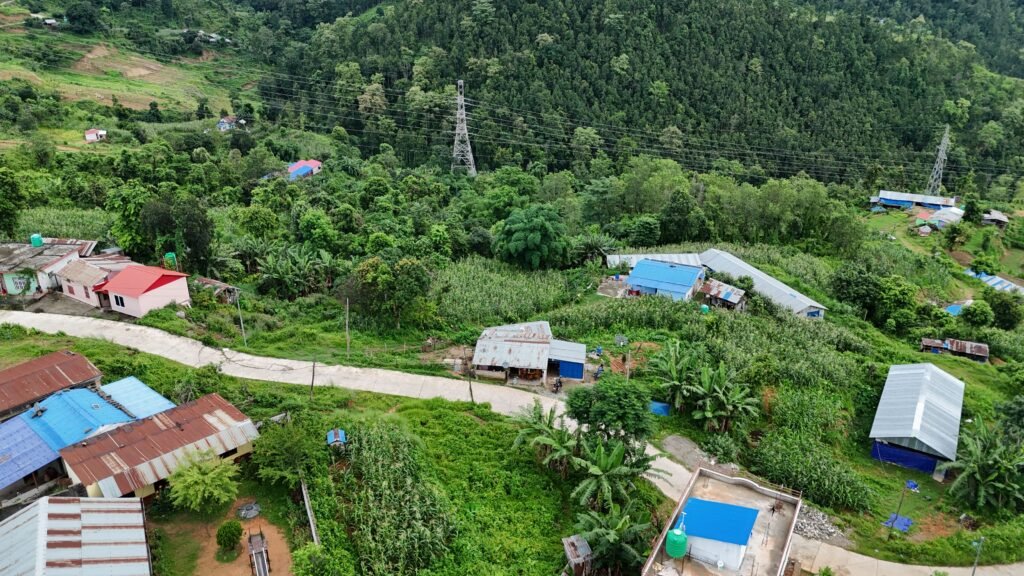
What Should You Consider Before Building a Construction Camp?
Before choosing a construction camp solution for your Southeast Asia project, several key factors should be considered, including project location, workforce size, transportation conditions, and future expansion needs.
Different projects require different solutions. A mining site in a remote area, an island construction project, or an industrial zone may have different requirements for accommodation design, transportation, and installation.
Project Location and Site Conditions
The project location is one of the most important factors when selecting a construction camp solution. In Southeast Asia, many projects are located in challenging environments, such as mining areas, remote construction sites, islands, and industrial zones.
Before choosing a modular solution, you should evaluate:
- Road access: Can transportation vehicles reach the project site efficiently?
- Transportation conditions: Are shipping and logistics methods suitable for delivering modular units?
- Local climate: Does the solution need to withstand heavy rain, high temperatures, humidity, or strong winds?
Number of Workers and Space Requirements
Workforce size directly affects the layout and facilities required for a construction camp. A well-planned camp should provide not only accommodation but also essential facilities for daily operations.
Depending on project requirements, you may need:
- Worker dormitories: For onsite accommodation
- Site offices: For project management and daily operations
- Dining areas: For providing daily meals
- Sanitary facilities: Including bathrooms and shower rooms
For large-scale projects such as mining, oil and gas, and infrastructure construction, workforce numbers may change during different project stages. Therefore, selecting a flexible worker accommodation solution is essential.
Modular construction camps allow flexible layouts and future expansion, making them suitable for projects that require accommodation for dozens or hundreds of workers.
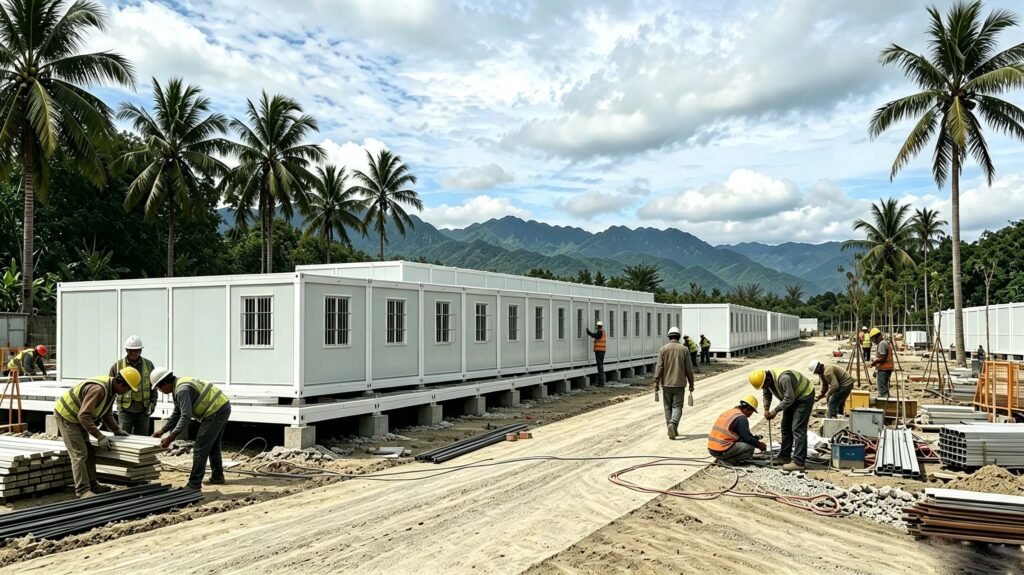
Project Timeline and Installation Speed
Project schedules are often a critical factor when planning a construction camp, especially for projects with strict deadlines. Traditional construction methods usually require a longer construction period and rely heavily on onsite labor, which can increase project delays and management challenges.
A modular construction camp provides a more efficient approach through:
- Factory production before delivery: Building components are manufactured and prepared in advance, reducing onsite construction work.
- Faster onsite installation: Modular units can be assembled quickly after arriving at the project site.
- Earlier project operation: Workers can move into the camp sooner, helping projects start operations faster.
For projects with tight schedules, a fast construction camp solution can help reduce construction time while improving overall project efficiency.
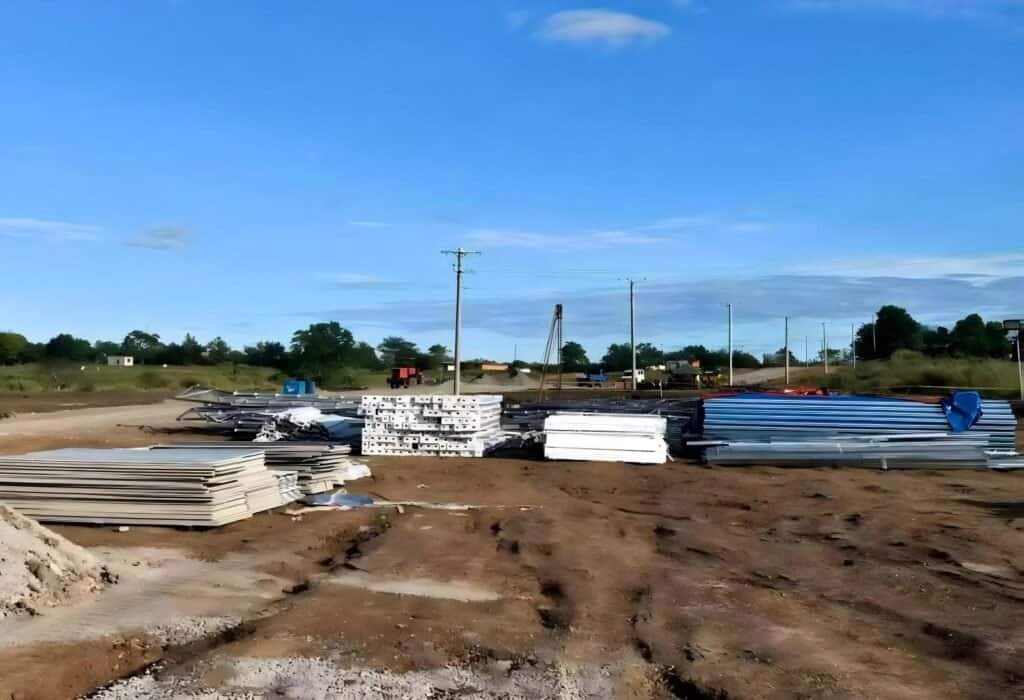
Transportation and Logistics Challenges
Transportation is another important factor when selecting a construction camp solution, especially for projects located in remote areas or islands across Southeast Asia.
Many construction sites face challenges such as:
- Limited infrastructure: Difficult transportation conditions and insufficient local facilities.
- Difficult site access: Challenges in delivering materials and equipment to remote locations.
- Higher transportation costs: Increased logistics expenses caused by complex transportation routes.
Before choosing a modular solution, you should consider:
- Container shipping: Whether the building design is suitable for international sea transportation.
- Transportation cost: How to reduce logistics expenses through optimized packaging and transportation methods.
- Site accessibility: Whether materials and building components can be delivered smoothly to the final installation location.
For remote projects, a Flat Pack Container House can be an ideal option. Its space-saving design allows more units to be shipped efficiently, reducing transportation difficulties while supporting faster installation at the project site.
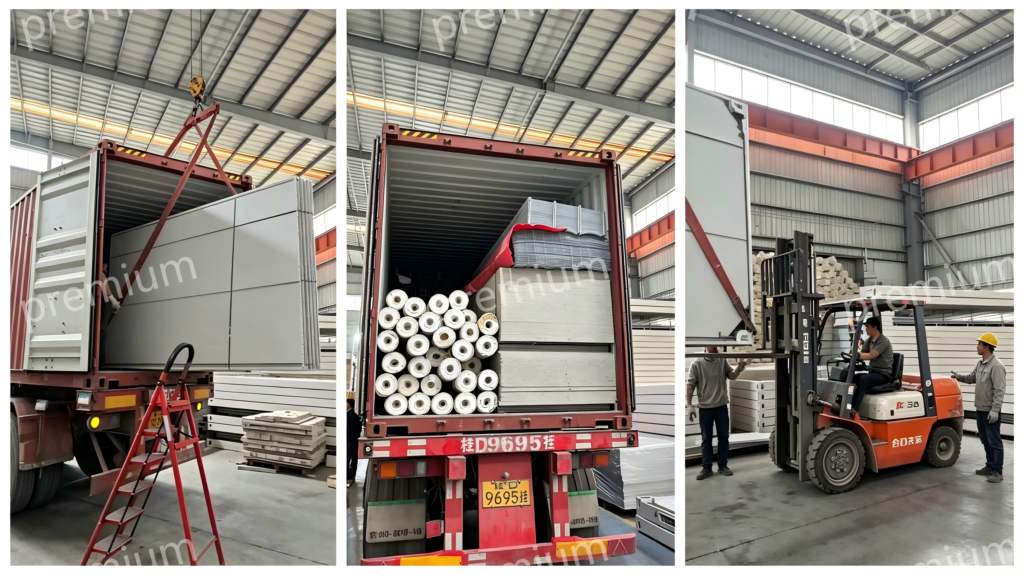
Future Expansion and Reusability
Construction projects often change during operation. The number of workers may increase, project schedules may be extended, or the entire camp may need to be relocated to a new site.
Therefore, future flexibility should also be considered when selecting a construction camp solution.
A modular construction camp provides several advantages:
- Expandable: Additional units can be added when workforce requirements increase.
- Relocatable: Modular buildings can be moved and reused for different project locations.
- Reusable: Components can be reused for future projects, helping reduce long-term costs.
For companies managing multiple projects or long-term development plans, choosing a flexible modular solution can provide greater adaptability throughout the project lifecycle.
2. Traditional Construction Camp vs Modular Construction Camp
When selecting a construction camp solution, project owners and contractors often compare traditional construction methods with modular construction options.
Traditional construction can be suitable for permanent projects, but it usually requires longer construction periods, more onsite labor, and greater dependence on local conditions.
A modular construction camp provides a more flexible approach through factory-controlled production, faster installation, and easier expansion or relocation, making it suitable for remote projects and large-scale developments.
The comparison below highlights the key differences between traditional construction camps and modular construction camps:
| Factor | Traditional Construction | Modular Construction |
|---|---|---|
| Construction Time | Long | Fast |
| Site Labor | High | Reduced |
| Remote Area Application | Difficult | Suitable |
| Quality Control | Depends on site conditions | Factory controlled |
| Relocation | Difficult | Possible |
| Expansion | Limited | Flexible |
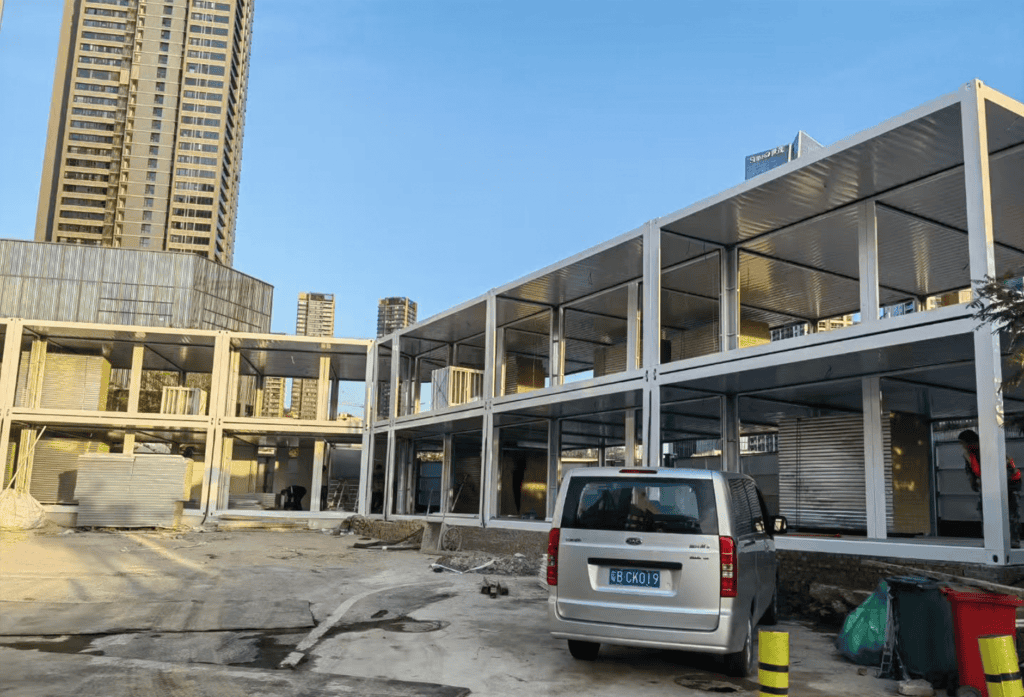
3. Choosing the Right Modular Construction Camp Solution
After considering project location, workforce requirements, transportation conditions, and future expansion needs, the next step is choosing the right modular construction camp solution.
Different projects require different accommodation solutions. A mining camp in a remote area may need a stronger and more durable structure for long-term operation, while an island or temporary project may prioritize transportation efficiency and fast installation.
Two common modular solutions for construction camps are detachable container houses and flat pack container houses.
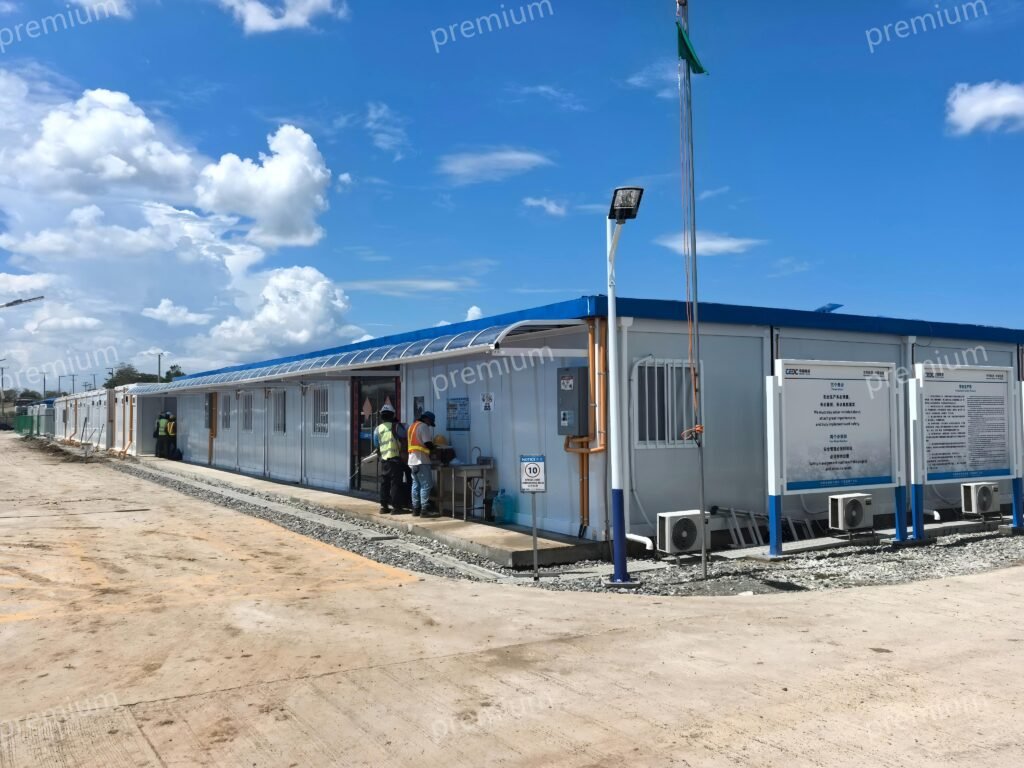
Solution 1: Detachable Container House
Best for:
- Mining camps
- Oil & gas camps
- Large construction projects
A detachable container house is a suitable choice for medium and long-term construction projects that require stable accommodation facilities and flexible layouts.
Its strong structure and modular design allow different units to be combined according to project requirements, making it suitable for large-scale worker accommodation, site offices, and supporting facilities.
Key advantages include:
- Strong structure: Designed for long-term use and different environmental conditions.
- Flexible layout: Units can be customized and combined based on project requirements.
- Suitable for long-term projects: Ideal for mining, energy, and infrastructure projects with extended operation periods.
- Easy maintenance: Modular components simplify repair and future upgrades.
For projects requiring reliable and expandable worker accommodation solutions, detachable container houses provide a practical option.
Solution 2: Flat Pack Container House
Best for:
- Remote projects
- Island projects
- Temporary accommodation
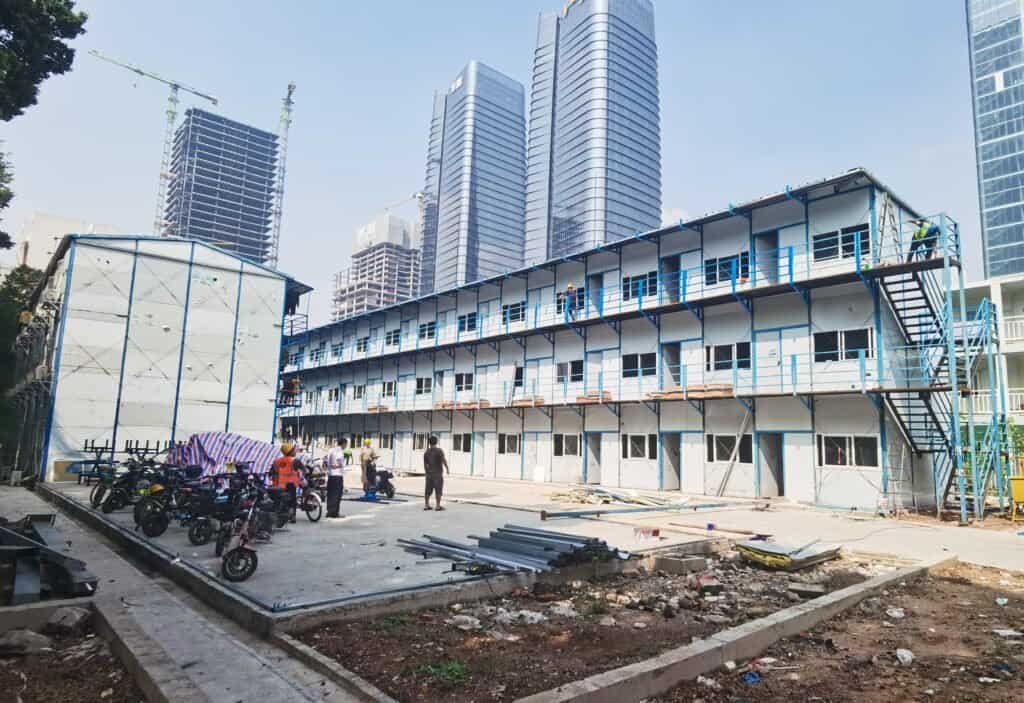
Flat pack container houses are designed for projects where transportation efficiency and quick installation are important considerations.
With a space-saving flat packing design, multiple units can be transported more efficiently, making them suitable for remote areas with limited access or higher logistics costs.
Key advantages include:
- Space-saving transportation: Flat-packed units reduce shipping space requirements.
- Easy shipment: Suitable for container shipping to overseas project locations.
- Fast installation: Components can be quickly assembled after arriving onsite.
For remote construction projects, a flat pack container house offers an efficient remote area accommodation solution with faster deployment and reduced transportation challenges.
4. How Are Modular Construction Camps Installed?
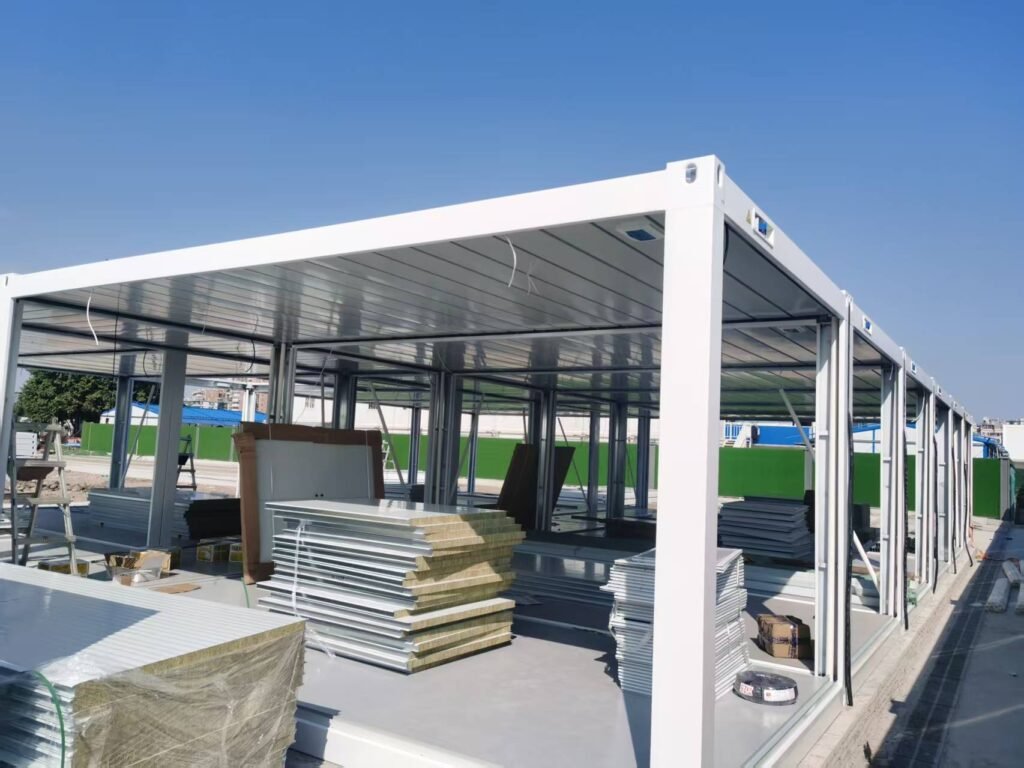
One of the main advantages of modular construction camps is the simplified installation process. Most components are manufactured and prepared in advance, reducing onsite construction work and allowing faster project completion.
The typical installation process includes four main steps:
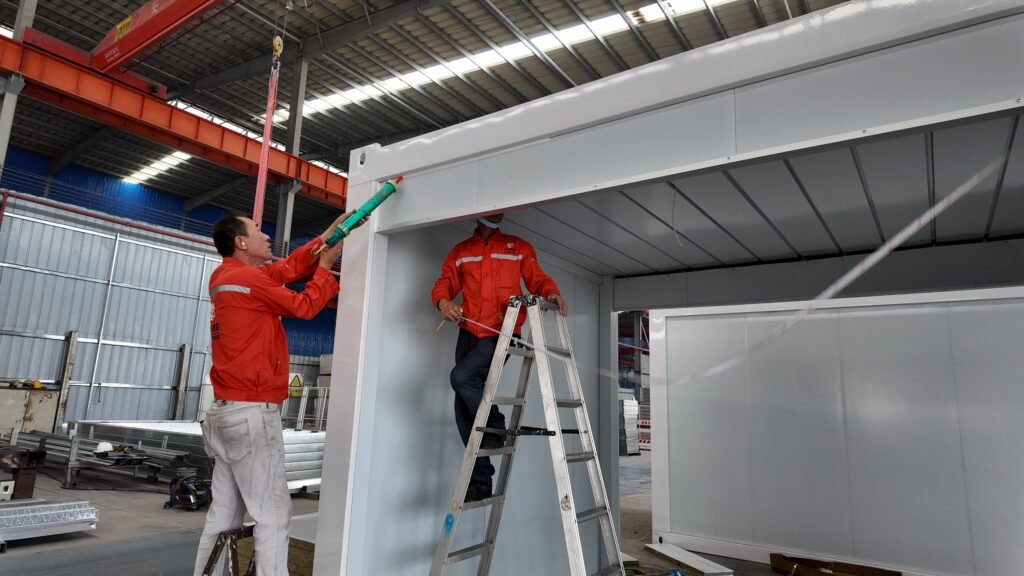
Step 1: Factory Manufacturing
Before delivery, the main components are produced and prepared in the factory, including:
- Steel structure
- Wall panels
- Electrical systems
Factory production helps ensure consistent quality and reduces onsite workload.
Step 2: Transportation to Project Site
After production, modular components are transported to the project location through suitable logistics methods, including:
- Container shipping
- Flat packing design
The transportation method depends on the project location, access conditions, and delivery requirements.
Step 3: On-site Installation
Once materials arrive at the site, workers complete the assembly process, including:
- Unit assembly
- Component connection
- Interior finishing
Compared with traditional construction methods, modular installation requires less onsite labor and can significantly reduce construction time.
Step 4: Ready for Operation
After installation is completed, the modular construction camp can be used for:
- Worker accommodation
- Site offices
- Supporting facilities
This allows project teams to start operations faster, especially in remote areas where traditional construction may require more time and resources.
Frequently Asked Questions
1 What factors should be considered when choosing a construction camp solution in Southeast Asia? −
2 Why are modular construction camps suitable for remote projects? +
3 What is the difference between a detachable container house and a flat pack container house? +
4 Are modular construction camps suitable for mining and oil & gas projects? +
5 How long does it take to install a modular construction camp? +
6 Can modular construction camps be customized for different project needs? +
7 Can modular construction camps be expanded or relocated? +
8 How are modular construction camps transported to Southeast Asia projects? +
Get the Right Modular Construction Camp Solution for Your Project
Planning a mining camp, remote construction site, oil & gas project or workforce accommodation facility? Tell us your project location, workforce size, application requirements and installation schedule. We will help you choose the most suitable modular construction camp solution based on your site conditions and transportation requirements.
Project drawings, workforce requirements and site conditions can help us recommend the most suitable modular camp layout.
Why Are Some People Afraid to Buy Modular Homes? Real Concerns Explained
Based in China, Premium Modular House is a professional prefabricated housing manufacturer and global supplier of prefab house, modular house, moving house, portable house, and flat pack container house.
With over 22 years of experience, we focus on providing durable, customizable, and eco-friendly prefab building solutions with fast installation, strong steel structure, and high efficiency.
As a trusted China factory, we serve clients in 80+ countries, offering one-stop modular housing systems designed for construction sites, camps, offices, and temporary accommodation.
Premium Modular House is committed to building smarter, faster, and greener — delivering innovative designs, reliable quality, and sustainable housing for global markets.